
US Lawmakers Back Iran War Resolution, Trump’s Veto Still Intact
May 21, 2026 Source: Rashtra Wire



×
![Popup Image]()
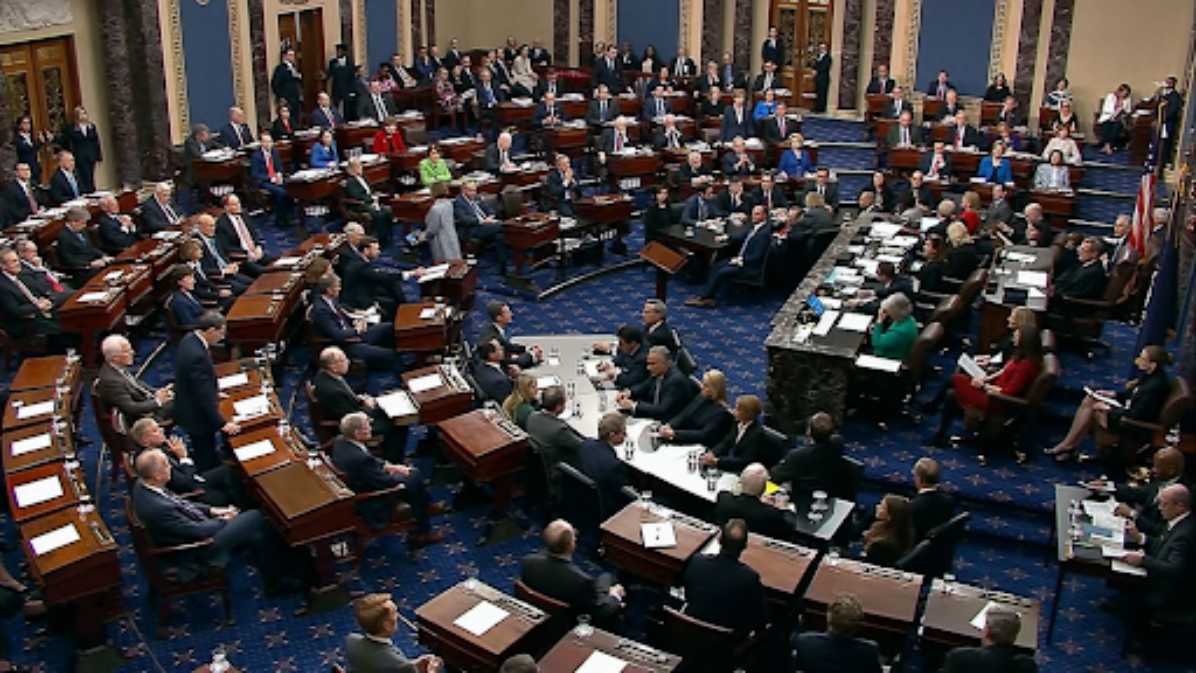
The United States Congress has passed a significant resolution aimed at limiting President Donald Trump’s military authority in relation to Iran, marking a major political confrontation between the White House and lawmakers. The resolution comes amid escalating tensions over U.S. involvement in Iran and growing criticism of Trump’s foreign policy decisions, including the handling of a controversial $1.8 billion fund and military actions taken without full congressional authorization.
The Senate vote concluded after multiple failed attempts, finally passing the resolution in an 8th round with a narrow 50–47 margin. The measure saw unusual bipartisan support, with four Republican senators joining Democrats in backing the proposal, while three Republican senators chose to abstain. The resolution was introduced by Democratic Senator Tim Kaine of Virginia, who has been a leading voice arguing that Congress must reclaim its constitutional authority over decisions related to war and military engagement.
At its core, the resolution seeks to end U.S. military involvement in operations related to Iran unless Congress formally approves a declaration of war or authorizes the use of military force. It reinforces the constitutional principle that the power to initiate war lies with the legislative branch, not solely with the president. If enacted fully, the measure could allow Congress to block military action, restrict funding, and overturn executive war decisions.
However, the legislative path ahead remains uncertain. The resolution still requires approval from the Republican-controlled House of Representatives before it can become binding. Even if it clears the House, President Trump retains the power to veto it. Overriding such a veto would require a two-thirds majority in both chambers of Congress, a threshold that is widely considered difficult to achieve given the current political composition.
The vote has been widely interpreted as a political setback for the Trump administration and a symbolic victory for congressional opponents who argue that recent military actions against Iran were taken without proper authorization. Lawmakers opposing the president have also raised concerns that the administration exceeded the 60-day reporting requirement under U.S. war powers law, particularly after U.S. strikes on Iran reportedly began on February 28.
The White House, however, defends its actions, arguing that the president acted within his constitutional authority to protect national security interests. Officials also claim that the 60-day limit was effectively paused due to a ceasefire reached in April, though critics, including Senator Kaine, strongly reject this interpretation, calling it inconsistent with the law.
As the debate continues, the issue highlights a deeper constitutional struggle in the United States over war powers, executive authority, and the role of Congress in decisions that could lead to armed conflict.