
Agni-1 Missile Successfully Tested from Odisha Range
May 23, 2026 Source: Rashtra Wire



×
![Popup Image]()
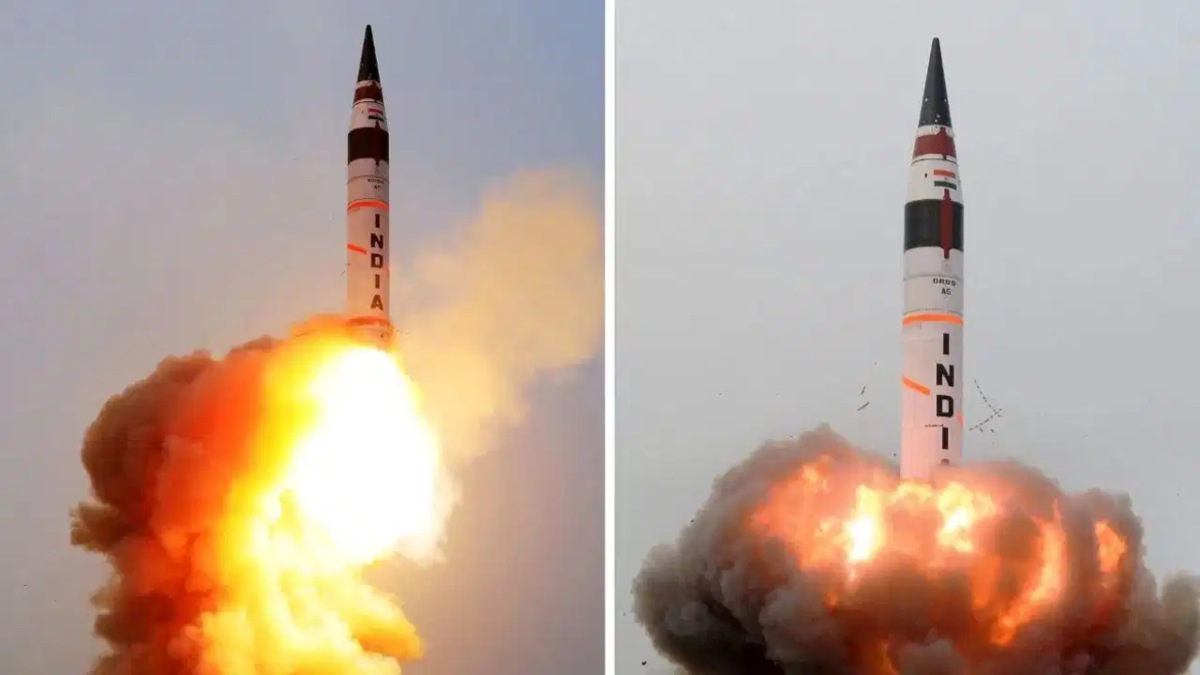
India has successfully conducted a test of the indigenously developed **Agni-1 ballistic missile**, marking another milestone in the country’s strategic defence capabilities. The test was carried out from the Integrated Test Range (ITR) in Chandipur, Odisha, under the supervision of the Defence Research and Development Organisation (DRDO) at approximately 6:30 pm.
The Agni-1 is a short-range ballistic missile designed to carry both conventional and nuclear warheads. According to official information, the missile has an operational range of around 700 to 1,200 kilometres, allowing it to cover a large portion of the region, including all of Pakistan. Defence officials stated that the successful test demonstrates India’s ability to engage multiple strategic targets with precision using a single missile system.
The launch was conducted from Dr. APJ Abdul Kalam Island off the Odisha coast, where DRDO regularly performs missile trials. The test was witnessed by senior scientists from DRDO along with Indian Army personnel. During the trial, the missile followed its planned trajectory and successfully hit the designated target with high accuracy. All operational and technical parameters were closely monitored, and officials confirmed that the system performed as expected without any deviations.
A statement from the defence ministry highlighted that the successful trial further validates India’s strategic preparedness and strengthens confidence in the Agni-1 missile system. The missile has been developed through collaboration between DRDO laboratories and Indian industry partners, reflecting the country’s growing self-reliance in defence technology.
The Agni-1 missile is a crucial part of India’s “credible minimum deterrence” strategy, which aims to maintain a strong but restrained nuclear posture. It was first inducted into the Indian Armed Forces in 2004 and has since been a key component of India’s short-range missile arsenal. One of its major operational advantages is its road-mobile launch capability, which allows it to be transported and launched from different locations, increasing its flexibility and survivability during conflict situations. Additionally, it is powered by solid fuel, which significantly reduces preparation time and enables quicker launch readiness compared to liquid-fueled systems.
In terms of specifications, the missile measures approximately 12 metres in length and weighs around 12 tonnes. It is capable of carrying a payload of up to 1,000 kilograms, which may include nuclear or conventional explosives depending on mission requirements. Its precision targeting system ensures high accuracy over long distances within its range bracket.
Overall, the successful Agni-1 test reinforces India’s continued advancements in missile technology and its commitment to maintaining a credible and reliable deterrent capability.